
Is This Email a Scam?
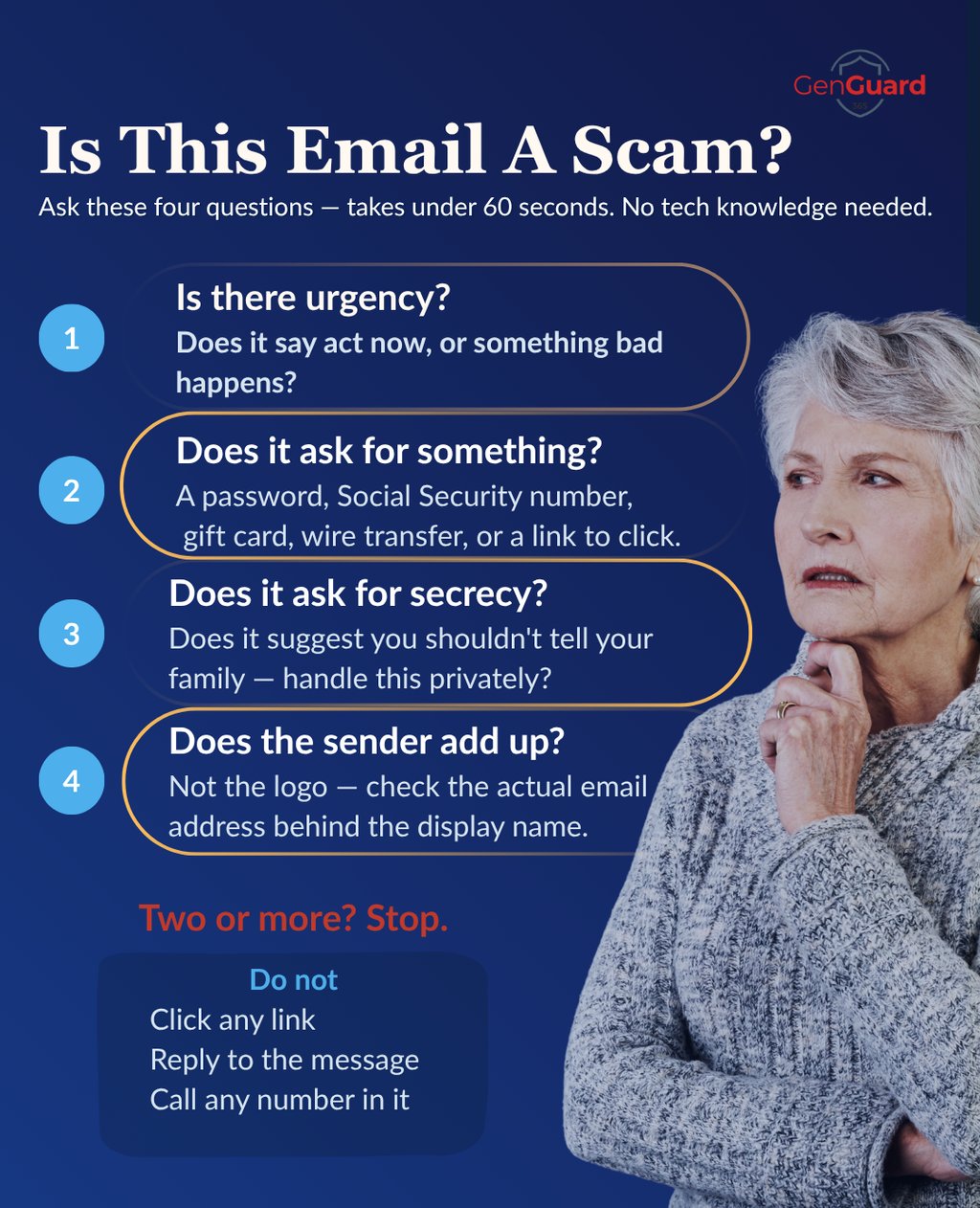
How to tell in 60 seconds. No technical knowledge needed. Just four questions.
EMAILS
Christy Robertson
5/18/20262 min read
They don't go after people who aren't paying attention.
They go after people who are.
That's the part most people get wrong. Scammers are not fishing for the distracted or the impulsive. They are looking for people who take their finances seriously, who read carefully, who have built something worth protecting. They are looking for you.
In 2024, Americans aged 60 and older reported losing nearly $4.9 billion to fraud. The FBI's own investigators have described the victims as doctors, lawyers, engineers, and judges. Not people who weren't paying attention. People who were.
So, if you've ever looked at an email and thought — wait, something feels off — that instinct is worth listening to. This article is about what to do with it.
Four questions. That's it
You do not need to understand how phishing works. You do not need to know what a spoofed domain is. You need to ask four things, and you can do it in under a minute.
1. Is there urgency? Does the email say you need to act today? This hour? That something terrible happens if you don't respond immediately?
Real organizations give you time. They send follow-up notices. They do not create emergencies over email. Manufactured urgency is designed to short-circuit your judgment. When you feel rushed, slow down.
2. Does it ask for something? A password. A Social Security number. A gift card. A wire transfer. A click on a link before anything else.
Write this down: a gift card is never a legitimate form of payment. Not for the IRS. Not for Medicare. Not for your bank. Not for anyone. If an email is asking for gift cards, you have your answer.
3. Does it ask for secrecy? Does it suggest you shouldn't tell your family? Is this a private matter to handle quietly?
Isolation is a tactic. Real institutions don't care who else knows you're updating your account. Scammers care very much.
4. Does the sender actually add up? Not whether the logo looks right — they can copy a logo in two minutes. Look at the real email address.
Does Amazon send emails from support-helpdesk-amazon@gmail.com? They don't. And ask yourself: did I do anything that would trigger this email? Did I order something? Do I have an account with them?
If the answer is no, that's worth paying attention to.
Don't click anything. Don't reply. Don't call any number in the message.
When you genuinely can't tell
Some emails are designed to be ambiguous. The good ones will give you pause. That uncertainty is worth respecting.
If you're not sure, go directly to the organization's website — type it in yourself, don't use any link in the email — and call the number you find there. Or show the email to someone you trust.
Or bring it to us.
The most dangerous part of a scam isn't the scam.
It's the silence that follows.
Safety Alerts:
Protecting Your Golden Years.
365 Days a Year.
Email: christy@genguard365.com


Home | Is This a Scam? | Scam Alerts | Learn | For Families | Our Story | Partner With Us | Privacy Policy | Terms of Use
GenGuard365 is a resource for education and awareness. We are not affiliated with any bank, government agency, or financial institution. We do not sell your information — ever. If you are in immediate financial danger, please contact your bank directly.
© 2026 GenGuard365 LLC. All rights reserved.